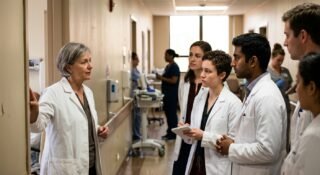
What Is the Meritus School of Osteopathic Medicine?
The Meritus School of Osteopathic Medicine (MSOM) is a new osteopathic medical school in Hagerstown, Maryland, built on the campus of Meritus Medical Center. Its inaugural class, 90 students, the Class of 2029, started in Fall 2025, which makes MSOM one of the newest medical schools in the United States.
Applying to a school this new is a different exercise from applying to an established one, and this guide is written for that. There is no match list to study, no alumni network, and no long run of admissions data. What there is instead is a clearly published set of requirements, an unusually transparent set of cost figures running three years forward, and one financial consideration so significant that it belongs before anything else.
Read This First: MSOM Is Not Yet Eligible for Federal Student Aid
This is the most consequential thing an applicant needs to know about MSOM, and it is easy to miss because it sits on a financial aid page rather than an admissions one. In the school’s own words:
“MSOM is not currently eligible to participate in Federal Student Aid programs utilizing Title IV aid. MSOM has applied for participation in Federal Aid programs in July 2025.”
MSOM currently uses private lenders for students who need to borrow. Work through what that actually means before you apply, because it reaches well beyond the four years of medical school:
- No federal Direct or Grad PLUS loans for the period the school is not Title IV eligible. Private educational loans are the route instead.
- Private loans are credit-based. Approval and interest rate depend on your credit history, and many students need a creditworthy co-signer. Federal loans do not work that way.
- Income-driven repayment does not apply to private debt. The federal repayment plans that make a resident’s salary survivable against six figures of borrowing are a feature of federal loans, not private ones.
- Federal forgiveness programs generally do not cover private loans. If your plan involves public service loan forgiveness or a federal repayment program in exchange for underserved-area practice, private debt does not automatically qualify.
None of that makes MSOM a bad choice. It does make it a choice you should make deliberately rather than discover in your second year. The school applied for federal aid participation in July 2025, so the position may well change, which is exactly why you should confirm the current Title IV status directly with the MSOM financial aid office before you deposit, not rely on this guide or any other. Ask specifically which academic years are covered, and what happens to loans already taken privately if approval comes through mid-program.
One small oddity worth raising with them at the same time: MSOM’s published cost of attendance includes a line for federal direct loan fees, which sits awkwardly alongside the Title IV statement. It is the sort of thing that usually has a straightforward explanation, and it is worth having that explanation before you sign anything.
Be an Informed Applicant
Everything in this guide comes from MSOM’s own published materials. Where the school has not published something, and for a school this new that covers a fair amount, including its secondary essay questions and its interview calendar, we say so rather than filling the gap. That matters more than usual here: while researching this guide we found a widely repeated figure putting MSOM’s secondary application fee at $50. The school’s own page says $100. Second-hand figures about new schools are wrong often enough that you should verify anything you plan to act on.
Accreditation and Approval Status
MSOM holds pre-accreditation status from the Commission on Osteopathic College Accreditation (COCA), the accrediting body for every osteopathic medical school in the country. It also holds conditional approval from the Maryland Higher Education Commission to operate in Maryland as an in-state degree-granting institution.
Pre-accreditation is the stage a new college occupies before it has cohorts far enough through the program to be assessed on outcomes. Schools typically move from pre-accreditation to provisional accreditation and then to full accreditation as their first classes progress. MSOM has not published a timeline for that progression.
Because accreditation status changes over time and genuinely affects your career, check MSOM’s current standing directly with COCA before applying. Any applicant to a pre-accreditation school should treat that as routine due diligence rather than an unusual step.
Mission and Leadership
MSOM states its mission as training “socially responsible, professionally accomplished and community-oriented physicians.” The founding rationale is a workforce one, Meritus Health’s President and CEO, Maulik Joshi, Dr.P.H., framed it as: “We started on this path to fill the critical shortage of physicians in our community, the state and the nation.”
That framing is worth taking seriously when you write your application. A school founded explicitly to address physician shortage in a specific region is looking for applicants who are plausible candidates to stay and practice in that kind of setting. If you have genuine ties to western Maryland, to rural or small-city healthcare, or to underserved communities more broadly, that is material worth foregrounding rather than mentioning in passing.
The school’s dean is Brian A. Kessler, D.O., D.H.A., FACOFP dist., who took up the role on 1 July 2025. He came to MSOM from Campbell University’s Jerry M. Wallace School of Osteopathic Medicine in North Carolina, where he served as dean, and before that was dean at Lincoln Memorial University in Tennessee and director of medical education at Cleveland Clinic South Pointe Hospital in Ohio. He earned his D.O. and D.H.A. from the Lake Erie College of Osteopathic Medicine and sits on the boards of the NBOME and COCA. Dr. Paula Gregory served as the school’s founding dean.
Leadership matters more at a new school than at an old one, and a dean who has previously built and run osteopathic programs elsewhere is a reasonable thing to weigh in MSOM’s favor.
Class Size and Growth
- Inaugural class, Fall 2025: 90 students: the Class of 2029
- Planned future classes: 180 students
A doubling of the class is a substantial scaling exercise, and it is the right subject for questions on interview day. Clinical rotation capacity is the constraint that binds hardest when a medical school grows, so ask how many sites are secured, how placements are assigned, and how the school is expanding faculty and student support alongside the intake. A school that has thought this through will have ready answers.
Selection Factors, GPA, and MCAT Requirements
For the 2026–2027 cycle, MSOM describes its most competitive candidates as having:
- A minimum overall GPA of 3.5
- A science GPA of at least 3.5
- An MCAT at or above the 50th percentile
- MCAT scores from exams taken on or after 1 January 2023
- A Bachelor of Arts or Science from an accredited U.S. institution by the end of June 2027
- U.S. citizenship or permanent U.S. residency
Note the phrasing carefully. MSOM describes these as the profile of competitive candidates rather than as hard cut-offs, which is a softer formulation than a published minimum. The practical reading is the same either way: a 3.5/3.5 with a median-or-better MCAT is the shape of application the school is asking for, and going in materially below that means relying on the rest of your file to carry more weight than it usually can.
MSOM does not publish a CASPer, AAMC PREview or situational-judgment requirement. Confirm that with admissions rather than assuming, since these requirements get added between cycles more often than applicants expect.
Letters of Recommendation
MSOM requires two letters: preferably one from a D.O. or M.D., and one from either a prehealth advisor or a science faculty member. If you have been out of school for five years or more, a healthcare professional may substitute for the academic letter.
Two letters is fewer than many schools ask for, which raises rather than lowers the stakes on each one. A generic letter from a physician who barely knows you is worth less than a specific one from someone who supervised you closely, and with only two slots there is nowhere for a weak letter to hide. Approach recommenders early, and give them something to work from, your personal statement, your activities list, and a reminder of the specific things you did with them.
Prerequisite Coursework
All prerequisites must be completed with a grade of C or better:
- English I & II, 3.0 credits each
- General Chemistry I & II with lab, 4.0 credits each
- Organic Chemistry I & II with lab, 4.0 credits each
- Physics I & II with lab, 4.0 credits each
- Biology/Zoology I & II with lab, 4.0 credits each
Two things stand out. MSOM requires a full year of organic chemistry with lab and does not publish a biochemistry substitution, which is less flexible than some osteopathic programs. And the labs are specified explicitly for all four science sequences, if any of yours were taken without a lab component, sort that out before you apply rather than hoping it passes review.
Cost of Attendance
MSOM publishes cost of attendance three years forward, which is unusually transparent and lets you see the trajectory rather than guessing at it:
- 2025/2026: tuition $55,000, comprehensive fee $3,500, total cost of attendance $99,632
- 2026/2027: tuition $56,100, comprehensive fee $4,500, total cost of attendance $102,707
- 2027/2028: tuition $59,500, comprehensive fee $4,500, total cost of attendance $107,330
Those totals include housing, food and other budgeted expenses on top of tuition and fees; MSOM lists housing at $24,132 for the first two published years. Students are expected to live on campus for the first two years, so treat the housing line as a fixed cost rather than something you can economise your way around early on.
Read the trajectory rather than just the first number. Tuition rises from $55,000 to $59,500 across the three published years, a little over 8 percent, and the total cost of attendance climbs from $99,632 to $107,330. Four years at roughly the third-year figure puts total cost past $400,000 before interest. With private rather than federal borrowing, that interest is the part that deserves the most attention.
Scholarships
MSOM offered 15 scholarships for the 2025 academic year and is offering 17 for 2026, ranging from $10,000 per year up to full tuition. Against a class of 90 growing toward 180, that is a meaningful proportion, and given the federal aid position, scholarship money at MSOM is worth more than the same figure would be at a Title IV school, because every dollar of it is a dollar you are not borrowing privately.
You will sometimes see MSOM’s tuition quoted as “$220,000 over four years” in second-hand sources. That number comes from the value of a full-tuition scholarship award, not from a published rate. The actual published figures are above.
The Pathways Program
MSOM runs a Pathways Program it describes as “a collaborative initiative designed to help qualified students and alumni from select partner institutions prepare for a successful future in medicine, starting with a guaranteed interview.”
The partner institutions are Bucknell University, Frostburg State University, Gettysburg College, Harrisburg University, Samuel Merritt University, Shepherd University, Susquehanna University, and the University of Maryland. To be eligible you must be currently enrolled at or have graduated within two years from one of them, be in good academic, professional and disciplinary standing, and meet MSOM’s coursework, GPA and MCAT expectations.
Be precise about what this offers: a guaranteed interview, not guaranteed admission. That is still a substantial advantage, the interview is the gate most applicants never reach, but it is not a place. The program also includes connections with admissions staff and current students, priority access to MCAT and interview preparation workshops, and guidance toward careers in underserved communities.
If you are an undergraduate at one of those eight institutions and osteopathic medicine is on your list, this is worth pursuing early rather than in your application year.
Applying Through AACOMAS
MSOM takes applications through AACOMAS, the American Association of Colleges of Osteopathic Medicine Application Service.
The secondary application carries a $100 non-refundable fee, waived if you hold an approved AACOMAS fee waiver. It includes two required short answer questions and a short survey; MSOM does not publish the questions in advance, so treat anyone claiming to know them with suspicion. Admitted applicants must notify the Office of Admissions of their intention to enroll and pay two non-refundable enrollment deposits.
MSOM does not publish its primary and secondary deadlines on its how-to-apply page, and figures circulating elsewhere could not be confirmed against the school’s own materials. Get your dates directly from the admissions office, and given that everything else about the school points to a conventional AACOMAS calendar, plan to apply early in the cycle regardless.
Interview Format and How to Prepare
MSOM states that invited applicants “will participate in a virtual and in-person interview.” Read that as both components rather than a choice between them, and budget for a trip to Hagerstown accordingly.
The school does not publish whether its interviews are traditional or multiple-mini format, nor its interview calendar. Ask when you are invited: the two formats reward completely different preparation, and it is a reasonable question that admissions offices answer readily.
Whatever the structure, expect these:
- Why osteopathic medicine? Answer in your own words, with evidence from something you have done rather than something you have read.
- Why a school without a track record? A fair question and one to welcome. Say what you would contribute to a culture still being formed, not just what you hope to get from it.
- Why Hagerstown, and why physician shortage? The school was founded to address workforce gaps. Connect your answer to that.
- Have you understood the financial position? You may not be asked directly, but raising the Title IV question yourself shows you have done real diligence rather than skimming a brochure.
For the virtual component, treat logistics as part of the preparation: test camera, microphone and connection ahead of time, choose somewhere quiet with a plain background and decent light, and have a phone fallback with a contact number ready in case the video fails.
Why Osteopathic Medicine, and Why That Question Matters
Every DO applicant is asked why osteopathic rather than allopathic medicine, and a great many answer badly, usually with something that amounts to “I applied to both.”
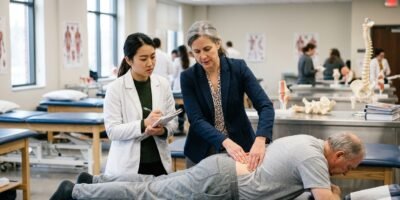
A Doctor of Osteopathic Medicine is a fully licensed physician who can practice in any specialty in any state, prescribe medication and perform surgery. DO and MD graduates enter the same residency match. The training differs in two concrete ways: osteopathic students complete additional hours in osteopathic manipulative treatment, and the philosophy places explicit weight on treating the whole patient. Osteopathic students sit the COMLEX licensing series, and many also sit the USMLE, particularly when targeting competitive or allopathic-heavy programs.
Our guides on DO vs MD and what the difference means for your application and on explaining osteopathic manipulative medicine to skeptics are both worth reading before you interview. If you are building a wider list, our DO school rankings are a reasonable starting point.
Studying in Hagerstown
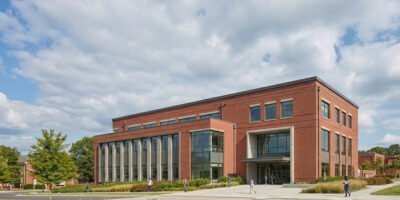
MSOM sits on the Meritus Medical Center campus in Hagerstown, in western Maryland, with D.M. Bowman Academic Hall as its main building. Being embedded on a working hospital campus is a genuine structural advantage for a new school: the clinical environment is not somewhere students travel to, it is next door.
Hagerstown is a small city rather than a major metro, which cuts both ways. Cost of living is lower than in the coastal cities where much of American medical education sits, and for a student borrowing privately that difference compounds meaningfully across four years. Against that, a smaller city offers less in the way of the amenities and distractions some students want, and the on-campus living expectation for the first two years means less flexibility in how you arrange your life early on. Visit if you can: the in-person interview component gives you that opportunity, so use it to assess the place rather than just to be assessed.
What MSOM Does Not Have Yet
The inaugural class matriculated in Fall 2025 and graduates in 2029. That means MSOM currently has no COMLEX or USMLE pass rates, no residency match rates, no match list, no specialty placement data and no alumni. Not weak numbers: no numbers, because nobody has finished yet.
If you find a site quoting match rates or board pass rates for MSOM, treat that as a reason to distrust the source rather than as a data point. What you can assess instead is the leadership, the hospital partnership, the accreditation progression, the financial position, and how credibly the school answers your questions about scaling from 90 students to 180. Those are the leading indicators available, and they are the right things to ask about.
Is MSOM Right for You?
A new school suits some applicants and not others, and it is worth being honest with yourself about which you are.
MSOM makes sense if you are drawn to the workforce mission, you want the hospital-embedded setting, you are eligible for the Pathways Program, or you have a realistic plan for financing that does not depend on federal loans, scholarship money, family support, or a personal financial position that makes private borrowing manageable.
It makes less sense if your financial plan rests on federal income-driven repayment and public service loan forgiveness, if you want the certainty of a full accreditation history, or if you would find a school still building its culture and systems more stressful than exciting. None of these are wrong answers. They are just answers worth having before you deposit rather than after.
Admissions Consulting and Healthcare Internships
Applying to a new medical school rewards preparation that generalises: a strong personal statement, genuine clinical exposure, and interview practice that holds up in both virtual and in-person settings. International Medical Aid offers admissions consulting and pre-medical internships built around exactly that, including hands-on healthcare experience for applicants who need to strengthen the clinical side of their file.
Financing Without Federal Loans: What to Actually Do
Because the Title IV position is the defining practical feature of applying to MSOM right now, it deserves more than a warning. Here is how to approach it concretely.
Start by getting the current position in writing. The school applied for federal aid participation in July 2025, and approval processes move. Ask the financial aid office directly: what is the status today, which academic years would be covered if approval comes through, and what happens to loans already taken privately if it is granted mid-program. Get the answer by email rather than over the phone.
Then work out your actual gap. Take the published cost of attendance for your intended years, subtract any scholarship you are offered, subtract family contribution and savings, and what remains is the number you would be borrowing privately. Do that arithmetic before you deposit, not after.
Understand what private borrowing changes. Private educational loans are credit-based, so approval and rate depend on your credit history and most students need a creditworthy co-signer. Rates may be variable rather than fixed. There is no federal income-driven repayment safety net, which matters enormously during residency when your income is real but modest. And federal forgiveness programs generally do not cover private debt, so if your plan involved practicing in an underserved area in exchange for federal loan relief, that plan needs revisiting.
Weigh scholarships more heavily than you otherwise would. MSOM offered 15 scholarships for 2025 and 17 for 2026, from $10,000 a year up to full tuition. At a Title IV school a scholarship displaces federal borrowing; here it displaces private borrowing, which is more expensive and less forgiving. A given award is simply worth more at MSOM than the same number would be elsewhere.
And compare honestly against your other offers. If you hold an acceptance at a fully accredited, Title IV-eligible school, the comparison is not just tuition against tuition, it is your whole repayment landscape for the decade after graduation. That may still come out in MSOM’s favor depending on scholarship and fit. Just make sure you have actually run the comparison.
Your Application Timeline
MSOM does not publish its primary and secondary deadlines on its how-to-apply page, and dates circulating on other sites could not be confirmed against the school’s own materials, so this guide does not state them. Get your dates from the admissions office directly. What you can plan around is the general shape of an AACOMAS cycle:
- The year before you apply: finish prerequisites, sit the MCAT, and secure your two recommenders. MSOM accepts scores from exams taken on or after 1 January 2023 for the 2026–2027 cycle, check your test date against the cycle you are applying in.
- Spring: AACOMAS opens. Have your personal statement drafted and your work and activities entries written before the form is in front of you.
- Late spring to early summer: submit the primary as early as you reasonably can. AACOMAS verification takes longer the later you submit, because the queue grows across the summer.
- Summer onward: secondary invitations. MSOM’s secondary is two short answer questions plus a short survey and a $100 fee, turn it around quickly.
- Interview season: both a virtual and an in-person component, so budget time and money for travel to Hagerstown.
- On acceptance: two non-refundable enrollment deposits, plus notifying the Office of Admissions of your intent to enroll.
Writing Your Secondary for a Workforce-Mission School
MSOM does not publish its two short answer questions, so anyone claiming to know them is guessing. What you can do is prepare the underlying material, because schools founded on a workforce mission tend to probe the same things regardless of how the questions are worded.
Have these written down before your secondary arrives: a specific experience in a small-city, rural or underserved healthcare setting and what you concretely learned from it; an honest account of where you imagine practicing and why; a reason you are drawn to Hagerstown or western Maryland that is not simply that you applied there; and something you would contribute to a school still forming its culture.
That last one is worth dwelling on, because it is the question a new school is really asking. Established schools recruit students into an existing culture. A school on its first or second cohort is recruiting people who will define what the place becomes. If you have started something, a clinic initiative, a student organization, a program that did not exist before you built it, that is the material to lead with here.
If You Are Not Competitive Yet
MSOM describes competitive candidates as holding a 3.5 overall GPA, a 3.5 science GPA and an MCAT at or above the 50th percentile. If you are meaningfully short on any of those, there are better options than applying and hoping.
If the MCAT is the weak point, a properly structured retake usually beats another application cycle. If the GPA is the problem, a post-baccalaureate program or a special master’s demonstrates recent academic performance in a way an explanation never will. And if clinical exposure is thin, that is the most fixable of the three, sustained hands-on patient experience does more for a file than additional content review, and it also gives you something real to write about when a mission-driven school asks why you want to serve a particular kind of community.
One MSOM-specific route: if you are an undergraduate at Bucknell, Frostburg State, Gettysburg, Harrisburg University, Samuel Merritt, Shepherd, Susquehanna or the University of Maryland, the Pathways Program is worth pursuing well before your application year. A guaranteed interview is the single hardest gate to clear in this process.
Frequently Asked Questions About the Meritus School of Osteopathic Medicine
Is MSOM accredited?
It holds pre-accreditation status from the Commission on Osteopathic College Accreditation (COCA) and conditional approval from the Maryland Higher Education Commission to operate as an in-state degree-granting institution. It is not yet fully accredited, and no timeline for provisional or full accreditation has been published. Confirm current status directly with COCA before applying.
Can I get federal student loans at MSOM?
Not currently. MSOM states it “is not currently eligible to participate in Federal Student Aid programs utilizing Title IV aid” and that it applied for participation in July 2025. Students requiring loans use private lenders. This affects credit-based approval, repayment options and eligibility for federal forgiveness programs, so confirm the current position with the financial aid office before you deposit.
How much does MSOM cost?
Tuition is $55,000 for 2025/2026, $56,100 for 2026/2027 and $59,500 for 2027/2028, with a comprehensive fee of $3,500 then $4,500. Total published cost of attendance is $99,632, $102,707 and $107,330 for those three years respectively.
What GPA and MCAT does MSOM want?
For the 2026–2027 cycle, MSOM describes its most competitive candidates as having a minimum overall GPA of 3.5, a science GPA of at least 3.5, and an MCAT at or above the 50th percentile. Scores must be from exams taken on or after 1 January 2023.
How big is MSOM’s class?
The inaugural class that started in Fall 2025 has 90 students, the Class of 2029. Future classes are planned at 180.
Does MSOM interview virtually or in person?
Both. MSOM states that invited applicants “will participate in a virtual and in-person interview.” The school does not publish whether the format is traditional or multiple-mini, so ask when you receive your invitation.
What is the MSOM Pathways Program?
It offers a guaranteed interview, not guaranteed admission, to qualifying students and recent alumni from eight partner institutions: Bucknell, Frostburg State, Gettysburg, Harrisburg University, Samuel Merritt, Shepherd, Susquehanna and the University of Maryland. You must be currently enrolled or have graduated within two years, be in good standing, and meet MSOM’s coursework, GPA and MCAT expectations.
What prerequisites does MSOM require?
English I & II (3.0 credits each), plus General Chemistry, Organic Chemistry, Physics, and Biology/Zoology: each a full I & II sequence with lab, 4.0 credits each. All require a grade of C or better. Note that MSOM does not publish a biochemistry substitution for organic chemistry.
How many letters of recommendation does MSOM need?
Two. Preferably one from a D.O. or M.D., and one from a prehealth advisor or science faculty member. If you have been out of school five years or more, a healthcare professional may substitute for the academic letter.
How much is MSOM’s secondary application fee?
$100, non-refundable, and waived if you hold an approved AACOMAS fee waiver. You may see $50 quoted elsewhere, MSOM’s own page says $100.
Does MSOM accept international applicants?
No. Applicants must be U.S. citizens or permanent U.S. residents.
Where is MSOM located?
Hagerstown, in western Maryland, on the Meritus Medical Center campus. The main building is D.M. Bowman Academic Hall. Students are expected to live on campus for the first two years.
What is MSOM’s match rate?
There isn’t one. The first class started in Fall 2025 and graduates in 2029, so no residency match data, board pass rates or graduate outcomes exist for this school yet. Any source quoting them is not reporting real figures.
Who is the dean of MSOM?
Brian A. Kessler, D.O., D.H.A., FACOFP dist., who took up the role on 1 July 2025. He was previously dean at Campbell University’s Jerry M. Wallace School of Osteopathic Medicine and at Lincoln Memorial University. Dr. Paula Gregory served as founding dean.
Exploring Other Schools
Given the financial position described above, MSOM is a school you should be comparing carefully rather than applying to in isolation. These guides cover other osteopathic programs and the medical schools around Maryland and the wider mid-Atlantic:
- Johns Hopkins University School of Medicine
- George Washington University School of Medicine
- Georgetown University School of Medicine
- Philadelphia College of Osteopathic Medicine (PCOM)
- Rowan University School of Osteopathic Medicine
- West Virginia School of Osteopathic Medicine
- Edward Via College of Osteopathic Medicine (VCOM)
- NYIT College of Osteopathic Medicine
- Touro College of Osteopathic Medicine
- Ohio University Heritage College of Osteopathic Medicine
- Campbell University School of Osteopathic Medicine (CUSOM)
- Marian University College of Osteopathic Medicine
- Des Moines University College of Osteopathic Medicine
- Kentucky College of Osteopathic Medicine (KYCOM)
- A.T. Still University Kirksville College of Osteopathic Medicine
- Rocky Vista University College of Osteopathic Medicine
- Idaho College of Osteopathic Medicine
- Lake Erie College of Osteopathic Medicine (PA)
- University of Maryland School of Medicine
- Howard University College of Medicine