What Is Duquesne University’s Nasuti College of Osteopathic Medicine?
Duquesne University’s Nasuti College of Osteopathic Medicine is a new osteopathic medical school in Pittsburgh, Pennsylvania, which welcomed its first class of medical students in July 2024. If you have been searching for it as “Duquesne University College of Osteopathic Medicine,” you have the right school: the college has since been named the Nasuti College of Osteopathic Medicine, and you will see both names in circulation.
Applying to a brand-new medical school is a genuinely different exercise from applying to an established one, and most guides are not written for it. There is no match list to study, no alumni network to reference in your secondary, and no decade of admissions data to benchmark yourself against. What there is instead is a school in a hurry to build a class, a clearly published set of requirements, and a great deal less noise than you will find at a school in its fortieth cycle. This guide covers what Duquesne actually publishes, what it does not, and how to apply well to a college that is still writing its own history. If you are building a wider osteopathic school list alongside it, our DO school rankings are a good place to start.
Be an Informed Applicant
Everything in this guide comes from Duquesne’s own published materials. Where the university has not published something, and for a college this new, that covers a fair amount, we say so rather than filling the gap. For a new medical school in particular, second-hand figures circulate quickly and age badly, so verify anything time-sensitive against the college’s admissions pages before you rely on it.
What Pre-Accreditation Status Means for You
This is the first thing most applicants want to understand, and it deserves a straight answer. The Nasuti College of Osteopathic Medicine holds pre-accreditation status from the Commission on Osteopathic College Accreditation (COCA), the accrediting body for all osteopathic medical schools in the United States.
In Duquesne’s own words, that status means the university “can recruit and admit students to the medical college and is approved to teach the curriculum for the Doctor of Osteopathic Medicine (DO) degree.” Pre-accreditation is the stage a new college occupies before it has students far enough along to be assessed on outcomes; schools typically progress from pre-accreditation to provisional accreditation and then to full accreditation as their first cohorts move through the program.
Duquesne has not published a timeline for reaching provisional or full accreditation, and it does not publish a statement about how its current status bears on licensure or residency eligibility. Because accreditation status changes and because it genuinely matters to your career, check the college’s current standing directly with COCA before you apply rather than relying on any guide, including this one. Any applicant to a pre-accreditation school should be doing that as a matter of course.
Mission, Values, and Why They Matter for Your Application
Duquesne is a Catholic university in the Spiritan tradition, and the college’s mission statement says so plainly. It commits the college to training physicians who “will serve God, in the Spiritan tradition, by caring for all people in all communities, including in underserved urban and rural communities of Western Pennsylvania, the nation, and the world, addressing healthcare disparities among these communities,” and to graduating “physician leaders in all medical specialties with a focus on primary care.”
Read that carefully rather than skimming it, because two things in it are load-bearing for applicants. The first is underserved urban and rural Western Pennsylvania: a specific region, not a generic gesture at service. The second is primary care. A college that names primary care in its mission is telling you something about the applicants it wants, and an application that positions you as a future subspecialist with no interest in primary care is swimming against that current.
The college also publishes a values framework it calls LEADER: Love and Mercy, Ethics and Morality, Advancement and Personal Development, Diversity and Social Justice, Excellence, Responsibility to Profession and Community, and Servant Leadership. These are the sort of thing applicants skip past, and they shouldn’t. Values frameworks tend to reappear as interview questions and as the scaffolding behind secondary essay prompts. If you can point to something you have actually done that maps onto servant leadership or to addressing healthcare disparities, that is the material to bring: not the phrase itself repeated back.
The college’s founding dean is John M. Kauffman Jr., DO, FACOI, FACP, who also serves as Professor of Medicine.
Selection Factors, GPA, and MCAT Requirements
Duquesne publishes hard minimums, which is more than many schools do. To be considered, you need:
- A minimum 3.2 GPA, both science and overall, on a 4.0 scale
- A minimum MCAT score of 500
- An MCAT taken within three years of your intended matriculation date
- U.S. citizenship or permanent U.S. residency
- A baccalaureate degree completed before matriculation, with at least 90 hours, three quarters of the credits required for your degree, finished at the time you apply
Treat those numbers as a floor rather than a target. A published minimum tells you who will be screened out, not who will be admitted, and the inaugural class was selected from more than 4,300 applicants for 85 seats. The three-year MCAT window is worth flagging separately: it is tighter than the policy at a number of schools, so if you took the exam early in a gap year or two, check the date against your intended start before you assume it counts.
Prerequisite Coursework
- Biological Sciences, 8 hours
- Physics, 8 hours
- General/Inorganic Chemistry, 8 hours
- Organic Chemistry, 8 hours, of which Biochemistry may substitute for 4
- English/Composition, 6 hours
- Recommended: a minimum of 6 additional biomedical science hours at the 200 level or above
The biochemistry substitution is a useful piece of flexibility if your undergraduate sequence went that way, and the recommended upper-level biomedical hours are worth taking seriously. At a school without years of admissions data to lean on, demonstrated readiness for graduate-level science does real work in your file.
Class Profile and How Fast the College Is Growing
The Nasuti College is scaling quickly, and the size of the class you would be joining depends heavily on which cycle you apply in:
- Inaugural class, 2024: 85 students, selected from over 4,300 applicants
- Fall 2025: 137 students enrolled
- Fall 2026 target: 170 students
- Fall 2027 onward: 170 or more per class at full enrollment
Duquesne reported that more than 30 percent of the inaugural class were minorities or from underrepresented populations, 32 percent and 19 percent respectively.
The doubling of the class between 2024 and 2026 cuts both ways for an applicant. More seats mean more opportunity, and a class that grows faster than its applicant pool is arithmetically easier to enter. Against that, a rapidly expanding college is also building out clinical placements, faculty and student services in real time, so it is fair to ask direct questions on your interview day about how the school is scaling those things alongside the class.
Cost of Attendance
Duquesne published tuition of $61,000 per year for Fall 2024, with scholarships available. That is the most recent figure the university has published for the college, and it is worth treating as a reference point rather than a current quote: the DO admissions pages do not carry a tuition figure, and rates at a new school in a growth phase can move. Confirm the current year’s rate with the college before you build a budget around it.
Two other costs are published and worth planning for: the secondary application carries a $65 fee, and accepted students pay a nonrefundable deposit of $1,500. As always, tuition is only part of the picture, housing in Pittsburgh, food, transport, books, equipment and board preparation all sit on top, and you should build those into your own estimate rather than borrowing to a tuition figure alone.
The AACOMAS Primary and Duquesne’s Secondary Application
Like every osteopathic medical school, Duquesne takes applications through AACOMAS, the American Association of Colleges of Osteopathic Medicine Application Service. Its primary application window runs from May to December.
Secondary application invitations go out across the same May-to-December window, and the secondary carries a $65 fee. Because the college reviews on a rolling basis across a long window, applying early in the cycle is materially better than applying late, seats fill as the cycle runs, and a strong application submitted in November is competing for a smaller remaining pool than the same application submitted in June.
The Early Decision Track
Duquesne runs an Early Decision Track (EDT) with its own bar and its own calendar:
- Primary application due July 1
- Secondary application due July 15
- Science and overall GPAs of 3.5 or higher
- A competitive MCAT score relative to other applicants in the same cycle
Note how tight that turnaround is: two weeks between the primary and secondary deadlines. If EDT is your plan, have your secondary essays drafted before your primary is submitted rather than starting them once an invitation arrives. Early decision is the right call if Duquesne is genuinely your first choice and your numbers clear the higher bar, and the wrong call if you are still comparing offers, since the point of the track is commitment.
Interview Format and How to Prepare
Duquesne’s interview arrangement is unusual and genuinely worth knowing in advance, because it depends on where you live. Applicants within a four-hour drive of Pittsburgh interview in person. Applicants outside that radius interview virtually, by phone, Zoom or Teams. Interviews run from July through April.
Work out which side of that line you fall on early, because it changes how you prepare. If you are interviewing in person, you get the campus visit, the simulation hospital, the anatomy facilities, the feel of the place, and you should budget the travel. If you are interviewing virtually, you lose that, so do the homework another way: read the curriculum pages properly, and come with questions specific enough that they could not have been asked about any other school.
For a virtual interview, the practical things matter more than applicants expect. Test your camera, microphone and connection ahead of time. Pick somewhere quiet with a plain background and reliable light. Have a phone backup ready in case the video drops, and know who to contact if it does. None of this wins you a seat, but any of it can cost you one.
On substance, expect to be asked why osteopathic medicine specifically, and why a school without a track record. Both are fair questions and both reward a real answer. “I want to be part of building something” is only persuasive if you can say what you would contribute to the building.
Curriculum and Clinical Training
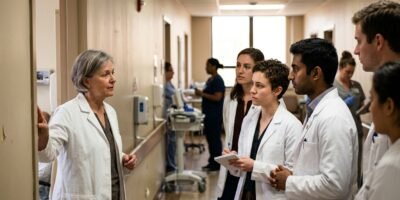
The Nasuti College runs a four-year DO program with classes starting every July. Years one and two focus on foundational science and clinical skills. Years three and four move into hands-on clinical training at partner facilities across Pennsylvania, Ohio and West Virginia.
On campus, the college has a simulation hospital, a virtual anatomy lab, cadaver-based dissection, and ultrasound and diagnostic radiography imaging. Duquesne has also established a partnership with Allegheny Health Network (AHN) for clinical training beginning in summer 2026, which matters for anyone matriculating into the larger classes, clinical capacity is the constraint that binds hardest when a medical school scales, and AHN is a substantial addition to it.
The multi-state clinical footprint is worth thinking about honestly. Training across three states can mean broader exposure and it can also mean relocating for rotations. Ask on interview day how sites are assigned, how much choice students get, and what the housing arrangements look like for rotations away from Pittsburgh.
Osteopathic Manipulative Medicine at Duquesne
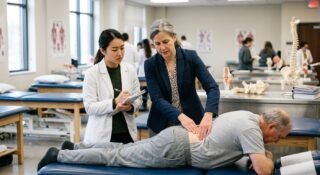
Osteopathic manipulative medicine is integrated into the curriculum with a dedicated lab, where, in the college’s description, “you will gain hands-on experience learning osteopathic manipulative treatment (OMT), an important component of the osteopathic program curriculum.”
If you are still weighing osteopathic against allopathic training, OMT is the clearest practical difference between the two paths and it is worth understanding properly before you interview, being asked why you want to be a DO rather than an MD, and having no substantive answer about manipulative medicine, is a common and avoidable stumble. Our guides on DO vs MD and what the difference means for your application and on explaining osteopathic manipulative medicine to skeptics are both useful preparation here.
Two Other Routes In: Early Assurance and the Master’s in Biomedical Sciences
Duquesne offers two pathways worth knowing about if the standard AACOMAS route is not your only option.
The Early Assurance Program is open to undergraduate students and offers a route to a seat earlier in the process. Duquesne lists a January 1 submission deadline for it; confirm the current date with the college, since early-assurance calendars move more often than main-cycle ones.
The Master’s in Biomedical Sciences (MBS) is the more interesting option for applicants who need to strengthen an academic record. Duquesne describes it as the only such program in the world using virtual anatomy technology, and states that 100% of its MBS graduates who applied to the Nasuti College of Medicine were accepted.
Take that figure for what it is. It is the university’s own statement about its own program, and it does not publish the cohort size behind it: a 100% rate means something very different across forty applicants than across four. It is also self-selecting, since students who struggle in the master’s are less likely to apply. That said, a special master’s program run by the medical school you want to attend is a well-established route for applicants whose GPA is the weak part of their file, and Duquesne publishing the claim at all tells you the pipeline is real. Ask the admissions office directly how many MBS students applied and matriculated in the last two cycles; if the answer is a good one, they will give it to you.
What Duquesne Does Not Have Yet
This section exists because its absence elsewhere is misleading. The inaugural class matriculated in July 2024 and is due to graduate in 2028. That means the Nasuti College of Osteopathic Medicine currently has no COMLEX or USMLE pass rates, no residency match rates, no match list, no specialty placement data, and no alumni. Not low numbers: no numbers, because no one has finished yet.
If you encounter a site quoting match rates or board pass rates for Duquesne, that is a signal to distrust the source rather than a data point to use. What you can reasonably assess instead is the strength of the clinical partnerships, the faculty the college has recruited, the resources on campus, and its progress through the COCA accreditation stages. Those are the leading indicators available to you, and they are the right ones to ask about.
Admissions Consulting and Healthcare Internships
Applying to a new medical school rewards preparation that generalises: a strong personal statement, real clinical exposure, and interview practice that holds up whether you are sitting across a desk in Pittsburgh or on a video call from your kitchen. International Medical Aid offers admissions consulting and pre-medical internships that build exactly that groundwork, including hands-on healthcare experience abroad for applicants who need to strengthen the clinical side of their file.
Why Osteopathic Medicine, and Why That Question Matters Here
Every DO applicant gets asked why osteopathic medicine rather than allopathic, and a surprising number answer badly, usually by saying something that amounts to “I applied to both.” Admissions committees at osteopathic schools have heard that answer several thousand times and it does not help you.
A Doctor of Osteopathic Medicine is a fully licensed physician who can practice in any specialty in any state, prescribe medication, and perform surgery. DO and MD graduates enter the same residency match through the same system. The training differs in two concrete ways: osteopathic students complete additional hours in osteopathic manipulative treatment, and the philosophy places explicit weight on treating the whole patient and on the body’s capacity for self-regulation. Osteopathic students sit the COMLEX licensing series, and many also sit the USMLE, particularly if they are targeting competitive specialties or allopathic-heavy programs.
The reason this matters specifically at Duquesne is the mission. A college that commits itself in writing to underserved urban and rural Western Pennsylvania and to a focus on primary care is not looking for applicants who see osteopathic medicine as a fallback. If you cannot articulate what draws you to the osteopathic approach in your own words, ideally with reference to something you have seen or done rather than something you have read, that is worth fixing before you apply, not on the day.
It is also worth knowing that Duquesne is not Pennsylvania’s only osteopathic option. The state also hosts the Lake Erie College of Osteopathic Medicine and the Philadelphia College of Osteopathic Medicine, both long-established, and both of which we cover separately. A school list containing all three is entirely reasonable; a secondary essay that could have been sent to all three is not.
Your Application Timeline, Month by Month
Duquesne’s primary window runs May to December, which is unusually long, and that length is a trap. A long window makes it feel as though there is no urgency, while the college reviews and admits on a rolling basis throughout. The practical effect is that an identical application is worth more in June than in November. Here is how to work backwards.
- The year before you apply, autumn to spring: finish prerequisites, sit or re-sit the MCAT, and line up recommenders. Remember Duquesne’s three-year MCAT recency rule: a score that felt recent when you took it may not clear the window by your intended matriculation.
- April to May: AACOMAS opens. Draft your personal statement well before this, and have your work and activities entries written rather than improvised into the form.
- May to early June: submit the primary. This is the single highest-leverage decision in the whole process for a rolling-admissions school.
- June onward: AACOMAS verification takes time, and it takes longer the later you submit, because the queue grows through the summer. Build that lag into your plan.
- May to December: secondary invitations go out. Turn yours around quickly: a fortnight’s delay on a secondary is a fortnight of seats being filled.
- July to April: interviews run. If you are outside the four-hour Pittsburgh radius, yours will be virtual.
- July: classes start, every year.
If You Are Applying Early Decision
The Early Decision Track compresses all of that. Your primary is due July 1 and your secondary just fourteen days later on July 15, and you need science and overall GPAs of 3.5 or better plus a competitive MCAT for the cycle. The practical consequence is that EDT is a decision you make in spring, not in June, there is no realistic way to draft strong secondary essays inside a two-week window while also waiting on AACOMAS verification.
Early decision is right if Duquesne is genuinely your first choice and your file clears the higher bar comfortably. It is wrong if you are hedging, because the point of the track is commitment and committing to a school you are lukewarm about costs you the rest of your cycle.
Writing Secondaries for a Mission-Driven School
Duquesne does not publish its secondary prompts, so anyone telling you what they are is guessing or recycling. What you can do is prepare the raw material, because mission-driven schools tend to ask variations on a small set of questions and the underlying evidence you need is the same regardless of phrasing.
Before your secondary arrives, have written down: a specific experience with an underserved population and what you actually learned from it rather than what you felt; a moment where you demonstrated something recognizable as servant leadership; a concrete reason you want to train in Western Pennsylvania specifically; and an honest account of your interest in primary care. That last one deserves care. If primary care is genuinely your direction, say so plainly and evidence it. If it is not, do not pretend, committees read a lot of these and manufactured enthusiasm is easier to spot than applicants think. It is entirely possible to write well about being drawn to a mission-driven school without claiming a career plan you do not have.
The LEADER framework is worth mining here. Pick the two values you can genuinely evidence and build around those rather than gesturing at all seven.
Preparing for the Interview in Detail
Duquesne interviews July through April, in person if you are within a four-hour drive of Pittsburgh and virtually otherwise. Whichever applies to you, expect these:
- Why osteopathic medicine? Answer in your own words, with evidence.
- Why a school without a track record? A fair question and one you should welcome. The honest answer usually involves the mission, the resources, or the clinical network, and it should include what you would bring to a college still forming its culture.
- Why Western Pennsylvania? Weak answers are geographic accidents. Strong ones connect to the underserved-communities part of the mission.
- Tell me about a time you served someone whose circumstances were unlike your own. Have two of these ready, not one.
- Ethical scenarios. Reason out loud, acknowledge the competing interest, and commit to a position rather than hedging indefinitely.
Prepare questions of your own, and make them specific enough that they could not be asked of any other school. For a college at this stage the genuinely useful ones are about scaling: how clinical rotation sites are assigned as the class grows toward 170, how much choice students have between Pennsylvania, Ohio and West Virginia placements, what housing support exists for rotations away from Pittsburgh, and where the college currently stands in the COCA accreditation sequence. Those questions signal that you have understood what you would be joining.
If you are interviewing virtually, treat the logistics as part of the preparation. Test your camera, microphone and connection in advance, choose somewhere quiet with a plain background and decent light, and have a phone fallback ready with a contact number in case the video fails. None of it earns you a place, but any of it can cost you one.
Paying for It, and Planning Realistically
Duquesne’s published figure is $61,000 per year for Fall 2024, with scholarships available. Two things follow from that. First, confirm the current year’s rate before budgeting, because a Fall 2024 number at a college in a growth phase is a reference point rather than a quote. Second, tuition is not the cost of attending, housing, food, transport, books, equipment, board preparation and licensing fees all sit on top, and the total you actually borrow will be considerably higher than the tuition line.
Build your own estimate rather than borrowing to whatever figure appears in a financial aid budget. Financial aid budgets are calculated to permit borrowing, not to recommend it, and the difference between the two compounds across four years and into residency, when your income is real but modest and interest has been accruing throughout.
Two costs specific to applying here are worth having in the plan: the secondary application fee of $65, and the nonrefundable $1,500 deposit on acceptance.
If You Are Not Competitive Yet
Duquesne screens at a 3.2 GPA in both science and overall and an MCAT of 500. If you are below either, applying this cycle is unlikely to be the best use of your money, and there are better moves than hoping.
The most direct one at Duquesne specifically is the Master’s in Biomedical Sciences described above. Special master’s programs run by the medical school you want to attend are a well-established route for applicants whose academic record is the weak part of the file, precisely because they let you demonstrate graduate-level science performance to the people who will be reading your application. Interrogate the acceptance claim before you commit to a year and the tuition, ask how many students applied and matriculated in each of the last two cycles, but the pathway itself is real.
If the MCAT is the problem rather than the GPA, the answer is usually a properly structured retake rather than another application. And if clinical exposure is thin, that is the most fixable gap of the three: sustained hands-on experience with patients does more for a file than another few weeks of content review.
Studying in Pittsburgh
Duquesne’s campus sits on the Bluff overlooking downtown Pittsburgh, which puts the college inside a genuine medical city rather than adjacent to one. Pittsburgh’s cost of living is markedly lower than the coastal cities where much of American medical education is concentrated, and for a student borrowing the full cost of attendance that difference is not trivial, it compounds across four years in the direction of less debt.
The practical caveat is the clinical footprint. Years three and four place students across Pennsylvania, Ohio and West Virginia, so “studying in Pittsburgh” describes the first half of the program more accurately than the second. Ask on interview day how far students typically travel and what the arrangements look like, and factor a possible second housing situation into your planning.
Frequently Asked Questions About Duquesne’s Nasuti College of Osteopathic Medicine
Is Duquesne’s medical school accredited?
It holds pre-accreditation status from the Commission on Osteopathic College Accreditation (COCA), which permits it to recruit and admit students and to teach the DO curriculum. It is not yet fully accredited. Duquesne has not published a timeline for provisional or full accreditation, so confirm the college’s current status directly with COCA before applying.
What GPA and MCAT do I need for Duquesne’s College of Osteopathic Medicine?
The published minimums are a 3.2 GPA in both science and overall on a 4.0 scale, and an MCAT of 500. The Early Decision Track requires 3.5 or higher in both GPAs plus a competitive MCAT. These are screening floors, not admitted-student averages: the inaugural class was chosen from over 4,300 applicants for 85 seats.
How old can my MCAT score be?
Your MCAT must be completed within three years or less of your intended matriculation date. That window is tighter than at some schools, so check your test date against your intended start year before assuming the score counts.
Does Duquesne use AACOMAS?
Yes. All applicants apply through AACOMAS. The primary application window runs May to December, secondary invitations go out across the same period, and the secondary carries a $65 fee. Early Decision Track applicants must submit the primary by July 1 and the secondary by July 15.
Does Duquesne interview in person or virtually?
Both, depending on where you live. Applicants within a four-hour drive of Pittsburgh interview in person; everyone else interviews virtually by phone, Zoom or Teams. Interviews run from July through April.
Does Duquesne accept international applicants?
No. Applicants must be U.S. citizens or permanent U.S. residents.
How big is the class?
The inaugural 2024 class had 85 students. Fall 2025 enrolled 137. The college is targeting 170 for Fall 2026 and 170 or more per class from Fall 2027 at full enrollment.
Is Duquesne’s medical school a DO or an MD program?
It is an osteopathic school, awarding the Doctor of Osteopathic Medicine (DO) degree. DO graduates are fully licensed physicians who practice in every specialty, prescribe medication and perform surgery, and they enter the same residency match as MD graduates.
Where is the Nasuti College of Osteopathic Medicine located?
On Duquesne University’s campus on the Bluff overlooking downtown Pittsburgh, Pennsylvania. Clinical training in years three and four takes place at partner facilities across Pennsylvania, Ohio and West Virginia.
What prerequisite courses does Duquesne require?
Biological Sciences 8 hours, Physics 8 hours, General/Inorganic Chemistry 8 hours, Organic Chemistry 8 hours (Biochemistry may substitute for 4 of those), and English/Composition 6 hours. The college also recommends at least 6 additional biomedical science hours at the 200 level or above.
How much does Duquesne’s DO program cost?
Duquesne published tuition of $61,000 per year for Fall 2024, with scholarships available. That is the most recent figure the university has published, so confirm the current year’s rate before budgeting. Separately, the secondary application carries a $65 fee and accepted students pay a nonrefundable $1,500 deposit.
Does Duquesne have an Early Decision option?
Yes. The Early Decision Track requires science and overall GPAs of 3.5 or higher plus a competitive MCAT for the cycle. The primary application is due July 1 and the secondary July 15: a two-week turnaround, so draft your essays before you submit the primary.
When do classes start at Duquesne’s College of Osteopathic Medicine?
Every July. The inaugural class began on 11 July 2024.
Where do Duquesne medical students complete clinical rotations?
At partner facilities across Pennsylvania, Ohio and West Virginia. Duquesne has also established a partnership with Allegheny Health Network for clinical training beginning in summer 2026.
Who is the dean of the Nasuti College of Osteopathic Medicine?
John M. Kauffman Jr., DO, FACOI, FACP, serves as Founding Dean and Professor of Medicine.
What is the LEADER framework?
It is the college’s published values framework: Love and Mercy, Ethics and Morality, Advancement and Personal Development, Diversity and Social Justice, Excellence, Responsibility to Profession and Community, and Servant Leadership. Values frameworks at mission-driven schools tend to resurface as interview questions and secondary prompts, so it is worth being able to evidence two of them from your own experience.
Does Duquesne offer a master’s pathway into the medical school?
Yes. Duquesne offers a Master’s in Biomedical Sciences, which it describes as the only such program in the world using virtual anatomy technology. The university states that 100% of its MBS graduates who applied to the Nasuti College of Medicine were accepted. That is the university’s own figure for its own program and it does not publish the cohort size behind it, so ask the admissions office how many MBS students applied and matriculated in the last two cycles before committing a year to it.
Does Duquesne teach osteopathic manipulative treatment?
Yes. OMM is integrated into the curriculum with a dedicated lab, where students gain hands-on experience in osteopathic manipulative treatment. If you are choosing between DO and MD programs, understanding OMT properly is the clearest practical difference between them, and being asked why you want to be a DO without having a substantive answer about it is a common and avoidable stumble.
How competitive is admission to Duquesne’s College of Osteopathic Medicine?
The inaugural class of 85 was selected from more than 4,300 applicants. The class has since grown, 137 in Fall 2025, with a target of 170 for Fall 2026, so the number of seats is rising, but the published GPA and MCAT minimums are screening floors rather than admitted-student averages.
What is Duquesne’s match rate?
There isn’t one yet. The first class matriculated in July 2024 and graduates in 2028, so no residency match data, board pass rates or graduate outcomes exist for this college. Any source quoting them is not reporting real figures.
Exploring Other Schools
Duquesne should not be the only osteopathic program on your list, and a school list built entirely of new colleges carries more risk than most applicants realise. If you are weighing your options, these guides cover other osteopathic programs and the other medical schools in Pennsylvania:
- Drexel University College of Medicine
- Penn State College of Medicine
- Geisinger Commonwealth School of Medicine
- Philadelphia College of Osteopathic Medicine (PCOM)
- Rowan University School of Osteopathic Medicine
- West Virginia School of Osteopathic Medicine
- Edward Via College of Osteopathic Medicine (VCOM)
- NYIT College of Osteopathic Medicine
- Touro College of Osteopathic Medicine
- Ohio University Heritage College of Osteopathic Medicine
- Campbell University School of Osteopathic Medicine (CUSOM)
- Marian University College of Osteopathic Medicine
- Des Moines University College of Osteopathic Medicine
- Kentucky College of Osteopathic Medicine (KYCOM)
- A.T. Still University Kirksville College of Osteopathic Medicine
- Rocky Vista University College of Osteopathic Medicine
- Idaho College of Osteopathic Medicine
- Lake Erie College of Osteopathic Medicine (PA)
- Lewis Katz School of Medicine at Temple University
- University of Pittsburgh School of Medicine