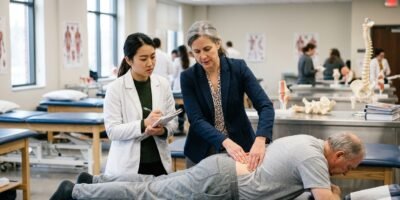
What Is the College of Idaho Physician Assistant Studies Program?
If you have been searching for a physician assistant program at The College of Idaho in Caldwell, the first thing to understand is that you will not find one, at least not in the way most applicants assume. The PA program taught at The College of Idaho is Idaho State University’s Master of Physician Assistant Studies, delivered at a C of I site under a partnership that began in 2013. ISU runs admissions, ISU sets the curriculum, and ISU awards the degree.
That distinction is not pedantry. It determines where you apply, what you pay, and, as we will get to, whether you have any real control over which campus you end up at. Two facts about this program are decision-changing and neither is prominent in most write-ups. This guide leads with both.
Be an Informed Applicant
Everything below comes from Idaho State University’s and The College of Idaho’s own published materials. Where something is not published, PANCE pass rates and interview format among them, we say so rather than filling the gap with a plausible-sounding number. For a program with a structure this unusual, second-hand summaries get it wrong regularly, so verify anything you plan to act on against ISU directly.
Read This First: Caldwell Students Pay Non-Resident Tuition, Whatever Their Residency
This is the single most consequential fact about the Caldwell site, and it is easy to miss because it sits in a fee table rather than in any admissions copy. For the 2026–2027 academic year:
- Meridian & Pocatello, Idaho resident: $15,850.00 per semester, $47,550.00 per year, $95,100.00 for the full six-semester program
- Meridian & Pocatello, non-resident: $25,504.50 per semester, $76,513.50 per year, $153,027.00 program total
- Caldwell (College of Idaho), every student regardless of residency: $25,504.50 per semester, $76,513.50 per year, $153,027.00 program total
Read that last line again. An Idaho resident assigned to Caldwell pays $153,027 in tuition rather than $95,100: a difference of $57,927 for the same degree, from the same university, taught over the same telepresence link, by the same faculty.
Including indirect costs, ISU’s published total cost of attendance is $142,208.00 for a resident and $200,135.00 for a non-resident or Caldwell student.
There is a straightforward reason for it. ISU states that “as a private institution, C of I does not receive state funding to support facilities or other expenses related to educating ISU PA students.” The Caldwell seats are funded through a public-private partnership rather than by the state, so the state-subsidized resident rate does not apply there. That is a coherent explanation. It does not make the number any smaller.
And You Do Not Choose Your Campus
Here is where the two facts collide, and why this section matters more than anything else in the guide.
You do not apply to Caldwell, or to Meridian, or to Pocatello. You apply to ISU’s PA program. According to ISU, “if an application’s file score is high enough… the applicant will receive access to a campus preference survey” allowing you to rank your preferences. Final assignment then depends on availability and on how you ranked.
So you get to express a preference only if you score highly enough to be offered the survey at all, and a preference is not a guarantee. For an Idaho resident, that means you cannot simply assume you will land one of the 60 resident-rate seats at Meridian or Pocatello. Twelve of the 72 seats sit at Caldwell, and a seat there costs an Idaho resident $57,927 more.
This is the question to put to ISU admissions in writing before you accept anything: how does campus assignment interact with the fee schedule, what happens if I am offered only a Caldwell seat, and can I decline a site assignment without losing my place? Ask it early. Ask it by email so you have the answer in writing. An admissions office that deals with this fairly will tell you plainly.
None of this means Caldwell is a bad seat. The site is small, the facility is purpose-built, and 12 students in a cohort is a different experience from 36. It means the financial consequence of where you are placed is large and not fully within your control, and that is something to understand before you apply rather than when the offer arrives.
How the Program Is Structured
ISU’s PA program is a 24-month, six-semester graduate curriculum, described by the university as modular and systems-based. Seventy-two students enroll each fall, distributed across three campuses:
- Meridian, 36 seats
- Pocatello, 24 seats
- College of Idaho, Caldwell, 12 seats
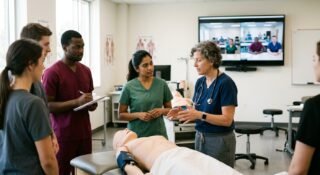
All three sites are linked by telepresence technology, so students at each receive the same classroom education. The Caldwell site opened in 2013 at the West Hall Center for PA Studies, and the first class under the ISU/C of I partnership graduated in May 2016.
The telepresence model is worth thinking about honestly rather than accepting at face value. It is what makes a 12-seat site viable at all, and ISU has been running it for over a decade. But distance delivery is a different daily experience from being in the room with the lecturer, and it suits some students far better than others. If you learn best by interrupting, by catching someone after class, by the informal density of a large cohort, a 12-person satellite site is a genuine adjustment. If you would rather be one of twelve than one of thirty-six, it is an advantage. Visit if you can, and ask current students at the Caldwell site directly what the day-to-day feels like: not what the brochure says it feels like.
Accreditation
The Accreditation Review Commission on Education for the Physician Assistant (ARC-PA) has granted Accreditation-Continued status to ISU’s Department of Physician Assistant Studies. ISU states that “the approximate date for the next validation review of the program by the ARC-PA will be March 2035.”
Accreditation-Continued is the status of an established program in good standing: a meaningful contrast with the provisional or pre-accreditation status carried by newer programs. A next review over eight years out is a sign of a program not currently under scrutiny. Graduating from an ARC-PA accredited program is also what makes you eligible to sit the PANCE, the national certifying examination, so accreditation status is not an abstraction.
ISU references PANCE pass-rate statistics but does not publish the figures on its accreditation or about pages. If board pass rates matter to your decision, and they reasonably might, request them from the program directly rather than trusting a number you find on an aggregator site.
Admissions Requirements
- Prerequisite grades: every prerequisite course must be passed with a C or better, and the GPA across the prerequisites must be 3.0 or higher
- Prerequisite courses: six required
- GRE: required, of every applicant, with percentile scores feeding into the file score
- Applications: both a CASPA application and a separate ISU Graduate School application
- Deadline: November 1
- Letters of recommendation: at least three, through CASPA
Note the prerequisite GPA is assessed on its own rather than folded into a cumulative figure. That cuts both ways: a rocky first year in unrelated subjects hurts you less here than at programs screening on cumulative GPA, but a weak grade in a prerequisite is harder to bury. If your prerequisite GPA is under 3.0, retaking a course is a more productive use of a year than applying and hoping.
ISU points to a separate Admission Requirements page for the specific six courses. That page was not retrievable when this guide was written, so rather than guess at the list, get it directly from the program, prerequisite lists are exactly the thing that changes between cycles.
The GRE Requirement
ISU requires the GRE “regardless of an applicant’s background,” and percentile scores form part of the file score calculation. There is no published minimum.
This matters because a great many PA programs have dropped the GRE in recent years, and applicants who built their list around GRE-optional programs sometimes discover the requirement late. If ISU is on your list, book the test early enough that you can retake it if the first score is poor: a percentile that feeds directly into a scored file is not something to leave to one attempt. Our guide to PA schools that don’t require the GRE is useful for building the rest of your list around it.
No Patient Care Experience Is Required, What That Actually Means
ISU states plainly: “Neither health care nor patient care experience is required for admission to the Program.”
For PA admissions, that is genuinely unusual. Most programs require substantial direct patient care hours, frequently in the several hundreds to a couple of thousand, and that requirement is the single biggest barrier for career-changers and for applicants who could not afford to work an unpaid or low-paid clinical role for a year or two. ISU removing it materially widens who can realistically apply.
Be careful how you read it, though. “Not required” is not the same as “not valuable.” Applications are scored, and clinical experience still gives you something to write about, something for referees to speak to, and a credible answer to why you want this profession rather than medicine or nursing. What the policy removes is a hard gate, not the advantage. If you have hours, use them. If you do not, this is one of the few programs where that alone will not end your application, and our guide to getting patient care hours without a certification is worth reading anyway, because most of the rest of your list will want them.
Applying Through CASPA
ISU requires two separate applications: the CASPA application used across PA programs, and an Idaho State University Graduate School application. Missing the second is a genuinely common way to fall out of a cycle without ever being reviewed, so diarise both.
The deadline is November 1. CASPA verification takes time and takes longer the later you submit, because the queue builds through the autumn, so a file submitted on the last day is not a file received on the last day. Build several weeks of slack into your plan.
Your Application Timeline
- The year before you apply: finish prerequisites with a C or better in each and a 3.0+ GPA across them; sit the GRE early enough to retake if needed; line up three recommenders.
- Spring: CASPA opens. Draft your personal statement before the form is in front of you, not inside it.
- Summer: submit CASPA. Early submission matters because verification is a queue.
- Summer to autumn: complete the separate ISU Graduate School application. Do not leave this to October.
- 1 November: deadline.
- After scoring: if your file score is high enough, you receive the campus preference survey. This is the point at which the tuition question becomes real, have your questions to admissions already answered by then.
Paying for It
Whichever site you land at, this is a six-figure program. ISU’s published total cost of attendance is $142,208 for a resident and $200,135 for a non-resident or Caldwell student, and the gap between those two numbers is larger than many applicants’ entire undergraduate debt.
Two pieces of planning follow. First, if you are an Idaho resident, model both scenarios rather than the one you are hoping for, work out what your borrowing looks like at $95,100 and at $153,027, and decide in advance which offers you would accept. Second, treat scholarship and grant funding as more valuable than usual, because every dollar of it displaces borrowing on a program at this price point. Our guides to PA school cost and to scholarships versus loans go deeper on the financing side, and our cheapest PA schools guide is a useful comparison point if cost is driving your list.
Living in Caldwell
Caldwell sits in the Treasure Valley in southwestern Idaho, west of Boise, and The College of Idaho is a small private liberal arts college: a very different setting from ISU’s main campus in Pocatello or the health sciences center in Meridian.
For a twelve-person cohort on a small campus, the practical questions are about integration rather than amenities. How much contact do Caldwell students have with the larger Meridian and Pocatello cohorts? Where do clinical rotations take place, and how far do Caldwell students travel for them? What campus services, library access, health services, student support, are available to ISU students at a C of I site, and which require traveling? These are reasonable things to ask and the answers vary more than you would expect at multi-site programs.
Is This Program Right for You?
ISU’s PA program makes a great deal of sense if you are an Idaho resident likely to be placed at Meridian or Pocatello, where $95,100 in program tuition is genuinely competitive nationally. It makes sense if you lack patient care hours and need a program that will not screen you out for it. And it makes sense if you want an established, Accreditation-Continued program rather than a new one still proving itself.
Think harder if you are an Idaho resident who would struggle with the Caldwell fee schedule, because you do not fully control which site you are assigned. Think harder if distance-delivered classroom teaching does not suit how you learn. And think harder if you built your list around GRE-optional programs, because ISU requires it of everyone.
None of these are disqualifying. They are the questions worth answering before you apply rather than after you are holding an offer with a fee schedule attached to it.
Admissions Consulting and Healthcare Internships
A strong PA application comes down to a personal statement that explains why this profession rather than an adjacent one, referees who can speak to you specifically, and, for most of your list, even if not for ISU, real clinical exposure. International Medical Aid offers admissions consulting and pre-health internships built around exactly that, including hands-on healthcare experience for applicants who need to strengthen the clinical side of their file. If you are still weighing the profession itself, our guide to physician assistant versus doctor: scope and training is a good place to start.
Understanding the File Score
ISU scores applications, and two of the things we know about that scoring are unusually explicit: GRE percentile feeds into the file score, and the file score determines whether you are offered the campus preference survey at all. That second point is worth sitting with. At most programs your score decides whether you get in. Here it also shapes how much you pay, because a higher score means more say in where you are placed, and where you are placed can be worth $57,927.
The practical consequence is that marginal improvements to your file are worth more at ISU than at a program with a single campus and a single fee schedule. A GRE retake that moves you ten percentile points is not just a better chance of admission; it is a better chance of a resident-rate seat. Treat the application as a scored exercise and optimise accordingly.
ISU does not publish the full scoring rubric, so do not trust anyone who claims to know the weightings. What is published, prerequisite GPA at 3.0 or above, every prerequisite at C or better, GRE percentiles counting, three letters minimum, tells you where the controllable inputs are.
Building the Rest of Your PA School List
ISU is an unusual program in enough respects that it should not be the only thing on your list, and its quirks tell you what to look for elsewhere.
- GRE-required versus GRE-optional. ISU requires it of everyone. Many programs no longer do. If you are a strong test-taker, ISU’s requirement works in your favor; if you are not, weight your list toward programs that have dropped it.
- Patient care hour requirements. ISU does not require them, which is rare. Most of your list will, and those requirements range from a few hundred hours to a couple of thousand. Check each program individually rather than assuming.
- Single-site versus multi-site. A single-campus program has one fee schedule and no assignment lottery. That certainty has real value if your finances are tight.
- Resident versus non-resident pricing. Public programs in your own state are usually the cheapest route into the profession, but as ISU shows, “public program in my state” does not automatically mean “resident rate”.
- Deadlines. ISU’s 1 November deadline is later than many. Do not let a late deadline lull you into a late submission when CASPA verification is a queue.
Our guide to PA school requirements and prerequisites is a good framework for comparing programs systematically rather than one at a time.
Strengthening Your Application
Because ISU scores files and does not gate on patient care hours, the levers available to you are slightly different from the standard PA advice.
Fix the prerequisite GPA first. It is a hard threshold at 3.0, assessed on the prerequisites alone. If you are below it, nothing else in your file compensates. Retaking a single weak prerequisite is often the highest-return year of work an applicant can do, and it is far more effective than an explanatory essay.
Take the GRE seriously and early. Percentiles count toward the score. Book it with enough runway to retake, and treat a first attempt as a diagnostic rather than a final answer.
Choose recommenders who can be specific. Three letters is the minimum through CASPA. A letter from someone who supervised you closely and can describe what you actually did beats a letter from a more senior person who barely knows you, every time.
Get clinical experience anyway. Not because ISU requires it, it does not, but because the rest of your list almost certainly will, because it gives your personal statement something concrete to stand on, and because it is the most reliable way to confirm to yourself that this is the profession you want. Applicants who have never worked alongside a PA often struggle with the one question every program asks: why this profession rather than medicine or nursing?
Why Physician Assistant Rather Than Physician?
Every PA program asks some version of this, and the weak answers are recognizable: shorter training, less debt, better hours. Those may all be true and they are all reasons about you rather than about the work.
The stronger answers tend to come from having seen the role done. PAs practice medicine as part of a team, with a scope that varies by state and setting, and with a professional structure that makes lateral movement between specialties considerably easier than it is for physicians: a PA can move from emergency medicine to dermatology without repeating a residency. For some people that flexibility is the whole appeal. For others the collaborative model is. Whatever your reason, ground it in something you have observed rather than something you have calculated.
If you are still genuinely undecided, that is worth resolving before you apply rather than during an interview. Our comparison of physician assistant versus doctor scope and training and our overview of how long PA school takes both help frame that decision honestly.
After You Graduate
Graduating from an ARC-PA accredited program makes you eligible to sit the PANCE, the Physician Assistant National Certifying Examination administered by the NCCPA. Passing it is what allows you to practice, and state licensure follows from there.
ISU’s program holds Accreditation-Continued status with a next validation review of approximately March 2035, so PANCE eligibility for its graduates is not in question in the way it can be at a newly established program still working through provisional accreditation. That is a meaningful advantage of choosing an established program, and it is worth weighing against the cost considerations above.
On earnings, PA compensation varies substantially by specialty, geography and setting, our guides to factors affecting PA salary give a realistic picture. Run those numbers against the borrowing you would take on at whichever site you are assigned, because a $200,135 total cost of attendance and a $142,208 one imply quite different repayment realities on the same starting salary.
Frequently Asked Questions About the College of Idaho PA Program
Is the PA program at The College of Idaho its own program?
No. It is Idaho State University’s Master of Physician Assistant Studies, delivered at a College of Idaho site in Caldwell under a partnership that began in 2013. ISU runs admissions and awards the degree. You apply to ISU, not to The College of Idaho.
How much does the program cost at the Caldwell campus?
For 2026–2027, every Caldwell student pays $25,504.50 per semester, $76,513.50 per year, and $153,027.00 for the full six-semester program, regardless of Idaho residency. Including indirect costs, the published total cost of attendance is $200,135.00.
Why do Idaho residents pay non-resident rates at Caldwell?
Because the Caldwell site runs as a public-private partnership. ISU states that “as a private institution, C of I does not receive state funding to support facilities or other expenses related to educating ISU PA students,” so the state-subsidized resident rate does not apply there.
Can I choose to study at Caldwell, Meridian or Pocatello?
Not directly. If your application’s file score is high enough, you receive access to a campus preference survey where you rank your preferences. Final assignment depends on availability and on your ranking. Because the fee schedule differs by site, ask admissions in writing how assignment interacts with tuition before you accept a place.
How many students are in each class?
Seventy-two per year across three campuses: 36 at Meridian, 24 at Pocatello and 12 at the College of Idaho site in Caldwell.
Does the program require patient care experience?
No. ISU states that “neither health care nor patient care experience is required for admission to the Program.” That is unusual among PA programs, most of which require substantial direct patient care hours. Experience still strengthens a scored application, it is simply not a bar to entry here.
Is the GRE required?
Yes, of every applicant regardless of background. No minimum score is published, but GRE percentile scores form part of the file score calculation.
What GPA do I need?
Each prerequisite course must be passed with a C or better, and the GPA across your prerequisite courses must be 3.0 or higher. Note that this is assessed on the prerequisites specifically rather than on your cumulative GPA.
What is the application deadline?
November 1. You must submit both a CASPA application and a separate Idaho State University Graduate School application, and CASPA requires at least three letters of recommendation.
How long is the program?
Twenty-four months across six semesters, following a modular, systems-based curriculum delivered by telepresence across the three campuses.
Is the program accredited?
Yes. ARC-PA has granted Accreditation-Continued status to ISU’s Department of Physician Assistant Studies, with the next validation review approximately March 2035. Graduating from an ARC-PA accredited program is what makes you eligible to sit the PANCE.
Where is the Caldwell site located?
At The College of Idaho in Caldwell, in the Treasure Valley of southwestern Idaho, west of Boise. The PA teaching facility is the West Hall Center for PA Studies, which opened for the partnership in 2013.
Do Caldwell students get the same teaching as Meridian and Pocatello students?
Yes. ISU links all three campuses by telepresence technology so that students at each site receive the same classroom education. What differs is the size of the cohort you sit with day to day, 12 at Caldwell against 36 at Meridian and 24 at Pocatello, and, significantly, the fee schedule.
Which degree do I actually receive?
A Master of Physician Assistant Studies (MPAS) awarded by Idaho State University, regardless of which of the three sites you study at. The College of Idaho hosts the Caldwell site; it does not award the degree.
Do I need to apply to The College of Idaho as well as ISU?
No. You apply to Idaho State University. What you do need is two ISU-side applications: the CASPA application used across PA programs, and a separate Idaho State University Graduate School application. Missing the second is a common way to fall out of a cycle without being reviewed.
How competitive is the program?
ISU enrols 72 students a year across three campuses and scores applications on a file score that incorporates GRE percentiles among other factors. ISU does not publish an applicant count or acceptance rate, so this guide does not state one, ask the program directly if you want a current figure.
Is there an advantage to being an Idaho resident?
For tuition, yes, but only at Meridian and Pocatello, where residents pay $95,100 for the program against $153,027 for non-residents. At the Caldwell site every student pays the non-resident rate. ISU does not publish a residency preference in admissions itself.
Can I decline a campus assignment?
ISU does not publish a policy on this. Given the fee difference between sites, it is a question worth putting to admissions in writing before you accept a place, specifically what happens if the only seat you are offered is at Caldwell.
What is the total cost including living expenses?
ISU publishes a total cost of attendance including indirect costs of $142,208.00 for a resident and $200,135.00 for a non-resident or Caldwell student, based on State Board of Education-approved rates for 2026–2027.
How many letters of recommendation do I need?
At least three, submitted through CASPA.
When does the program start?
Each cohort of 72 enrols in the fall. The application deadline is 1 November of the preceding cycle.
Does the program require the GRE if I already have a graduate degree?
ISU states the GRE is required “regardless of an applicant’s background,” so a prior graduate degree does not exempt you. No minimum score is published, but percentile scores count toward your file score.
Is prior healthcare experience really not required?
Correct, ISU states that neither health care nor patient care experience is required for admission. That is unusual among PA programs and it removes the barrier that most often blocks career-changers. It does not mean experience is worthless: applications are scored, and clinical exposure still strengthens your file and gives your personal statement something concrete to stand on.
What is the program’s PANCE pass rate?
ISU references pass-rate statistics but does not publish the figures on its accreditation or program pages, so this guide does not state one. Request the current rates directly from the program rather than relying on an aggregator.
Exploring Other Schools
Because campus assignment is outside your control and the fee difference between sites is substantial, this is a program worth applying to alongside several others rather than on its own. These guides cover the wider PA application landscape and the other medical programs in the region:
- PA School Requirements and Prerequisites
- Physician Assistant School Cost
- Cheapest PA Schools in the US
- PA Schools That Do Not Require the GRE
- Physician Assistant School Rankings
- How Long Is PA School?
- Cracking the CASPA Code
- Idaho College of Osteopathic Medicine
- Medical Schools in Idaho
- 10 Easiest PA Schools to Get Into
- Oregon Health and Science University (OHSU)
- University of Kansas School of Medicine
- How to Get Patient Care Hours for PA School
- Physician Assistant vs Doctor: Scope and Training
- PA School Scholarships vs Loans