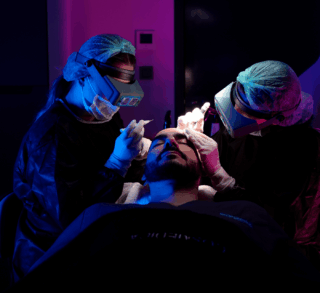
Hair loss sneaks up on people. One day, the part in your hair looks a little wider than it used to. A few years later, it’s the thing you dodge in family photos. Hair transplant surgery has come a long way since the plug-like results of the 1980s, and there are now more than one way to do it. FUE, FUT, DHI, Sapphire FUE. Each has its own tools, its own timeline, its own catch.
This is a rundown of how those four methods actually work, and why hair transplant in Turkey keeps coming up in the same breath. Most people looking into a hair transplant in Turkey want the mechanics before the sales pitch. So that’s where we’ll start.
What Actually Happens During a Hair Transplant?
Hair transplant surgery moves follicles from a spot where hair grows well, usually the back or sides of the scalp, to an area that’s thinning or bald. Surgeons use this donor area because hair there tends to be resistant to the hormone that triggers pattern hair loss. Each hair graft usually contains one to four hairs, and it’s handled as a single unit throughout.
- Follicles come out of the donor area
- A channel opening is made for each graft in the recipient area
- Follicles go into those channels one at a time, sometimes called hair implantation
The four methods below aren’t really different destinations. There are different ways to do the same three steps, and different approaches to shaping a natural hairline while they’re at it.
How Does FUT (Follicular Unit Transplantation) Work?
FUT is the older strip method. A surgeon cuts a thin strip of scalp from the donor area, then splits it into individual follicular units under a microscope.
It can pull a lot of grafts in one sitting, which is its main selling point. The downside is a linear scar and a longer healing stretch than FUE. That’s why many hair transplant clinics keep FUT on the shelf, mostly for patients who need very high graft counts and nothing else will do.
How Does FUE (Follicular Unit Extraction) Work?
FUE is the one most clinics lean on today. A surgeon uses a small punch tool to pull follicular units, usually one to four hairs, straight out of the donor area, one graft at a time.
Because nothing gets removed in one big strip, FUE leaves small scattered marks instead of a single scar line. Recovery tends to be faster than with older methods, and many patients are back to light activity within a few days. Good candidates usually have a stable donor area and don’t expect miracles in density.
Dr. Levent Acar of Cosmedica Clinic, a hair transplant clinic based in Istanbul, Turkey, explains why the donor area holds up so well long-term: “As the hair we take comes from the permanent donor zone, those follicles are not affected by DHT hormones, so once transplanted, they last for life.”
What Is DHI (Direct Hair Implantation) and How Is It Different?
DHI does the extraction and placement steps in a different order. Instead of cutting channels first and loading grafts afterward, the surgeon uses an implanter pen, a specialized tool that pulls and places each graft in a single motion.
- The pen holds the graft in a protective shield during implantation
- Less time spent handling the graft outside the body
- More control over the angle and depth of each one
That extra control is why DHI gets tied to tighter placement and better density right along the hairline. If you’re comparing FUE and DHI, or typing “FUE and DHI” into a search bar at 1 am, just know the surgeon’s hand still matters more than the tool name.
What Makes Sapphire FUE Different From Traditional FUE?

Sapphire FUE swaps steel blades for sapphire-crystal blades used to open the recipient channels. The sapphire edge cuts smaller, more precise incisions, with a distinct V-shaped cross-section.
Smaller cuts usually mean less scalp trauma around them. Surgeons who work with this sapphire hair transplant approach often report quicker initial healing and less swelling than with older blades.
Cosmedica Clinic pairs the sapphire blade with DHI implantation, sometimes billed as Sapphire DHI, to achieve the precision of a standard FUE hair transplant with a cleaner channel-opening step on top.
Dr. Acar has described how far the field has come on this front: “Hair transplantation has been practiced for over 80 years… Now, we’ve developed methods that look completely natural, so nobody can tell it was transplanted.”
How Do Clinics Choose the Right Method for Each Patient?
There’s no one-size-fits-all here. A hair transplant surgeon usually looks at a handful of things before picking an approach:
- Pattern and stage of hair loss
- Size and density of the donor area
- Number of grafts needed for the density the patient wants
- Hair type, texture, and curl pattern
- Whether the patients had a transplant before
Dr. Levent Acar, who leads the Cosmedica Hair Transplant Clinic in Turkey, is one of many surgeons who build a plan around this kind of case-by-case read, rather than running the same method on everyone who walks in. As Dr. Acar puts it, “We calculate mathematically how much is needed for real density. If a patient needs 4,000, it’s better to do it in one session than make him come back three times.” Clinics offering FUE, DHI, and Sapphire FUE side by side tend to be in a better spot to fit the method to the patient, not the patient to whatever the clinic happens to specialize in.
Why Has Turkey Become a Hub for Hair Restoration Surgery?
Turkey handles a large chunk of hair transplants worldwide at this point, and it comes down to a few things. Many transplant clinics in Turkey handle a high volume of cases each year, so surgical teams get extensive repeat practice with these exact techniques.
Equipment plays a part too. Sapphire blades and DHI pens take real training to use properly, and clinics competing internationally have a reason to keep upgrading. Safety standards and accreditation still differ from clinic to clinic, though, so anyone researching hair transplant in Turkey should look at the surgeon’s actual training and track record, not just the country stamped on the package.
Price is a big reason so many patients travel to Turkey for hair loss treatments in the first place. Turkey hair transplant costs often come in well below what the same procedure costs in Western Europe or North America. Looking at hair transplant before and after photos from a specific surgeon, not just a clinic’s general marketing gallery, is a better way to judge what to actually expect.
Which Method Is Right for You?

To decide which method is best suited to your case, here are a few questions worth asking whoever you talk to:
- Which techniques does this clinic actually do on a regular basis, and why is this one for me?
- What are realistic graft survival rates given my hair type and donor supply?
- Who’s doing the extraction and implantation, the lead surgeon or a tech team?
- What happens if something looks off once I’m back home?
A hair transplant is a long-term commitment, both financially and physically. Knowing how these four methods differ at least means walking into that conversation with the right questions, rather than just a price quote.
FAQ on Hair Transplant Methods
Which method scars the least? FUE and its offshoots, DHI and Sapphire FUE included, leave scattered small marks rather than one line. FUT leaves a linear scar since it removes a strip of scalp.
Is DHI just a better version of FUE? Not really better, just a different tool for the implantation step. Many surgeons achieve excellent results with standard FUE.
Does Sapphire FUE cost more? Often, yes, a little. The blades and the training behind them add expense, though pricing varies widely by clinic and country.
When do results actually show? Most people start seeing real growth around month six to nine, with the fuller picture closer to twelve months out. Dr. Acar sums it up simply: “The real results come after eight to 12 months. Patience is important.”